VR & AR Development with Unity & Unreal
Building immersive VR and AR experiences in Unity and Unreal Engine.
Building immersive VR and AR experiences in Unity and Unreal Engine.

Blueprints and C++ are both first-class ways to build gameplay in Unreal Engine 5. Blueprints are a visual graph of nodes. C++ is the language the engine itself is written in, exposed to you as game modules. This article is a decision guide for a solo developer. It is not a benchmark sheet. Nobody can…

Build three small procedural generation techniques, seeded randomness, constrained room placement, and noise-based variation, side by side in Unity and Godot. Procedural generation sounds like research territory, but most of what a solo developer needs comes down to three ideas. You need randomness you can repeat, a way to place pieces so they follow rules,…
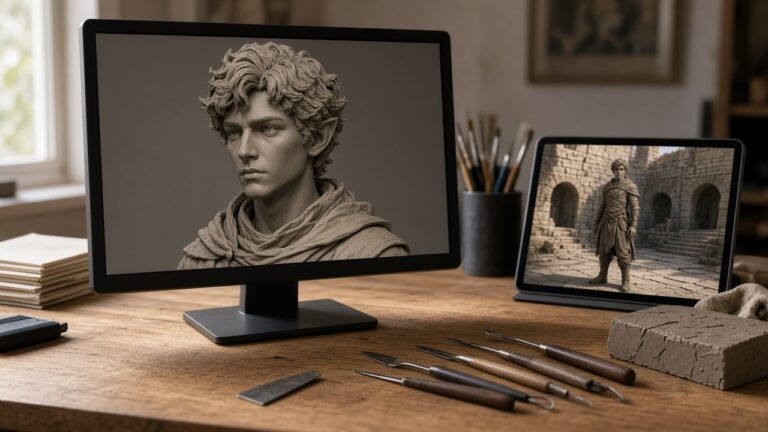
ZBrush is where a form gets its volume and surface detail. Unreal Engine is where that form has to draw every frame, collide, and sometimes deform. This workflow takes one asset from a finished sculpt to a placed actor in a test level. Do one statue, prop, or simple character. Do not plan a whole…
Professional techniques for integrating sound and music in modern engines.
Complete professional texturing pipeline for game assets using Substance Painter.

Choose between Unity and Unreal for your first XR project, then build one small test: a room, the player’s head, and one object that reacts when you look at it. Your first VR or AR project should not be a game. It should be a test that proves three things work: the headset or phone…